The core problem: speed destroys discipline
AI coding agents write code quickly. That is not the difficult part. The difficult part is preventing agents from modifying test assertions to make failing tests pass, or claiming a job is done when tests were never verified in an authentic failing state.
Strict separation of roles
An agent cannot act as both tester and coder on the same lot:
- Orchestrator (Codex): Verifies RED, generates SHA-256 seals, reviews deliverable integrity.
- Tester (Claude/Codex): Writes acceptance tests prior to production code.
- Coder (AGY/Cline): Implements code toward GREEN without modifying sealed tests.
RED Seal cryptographic mechanics
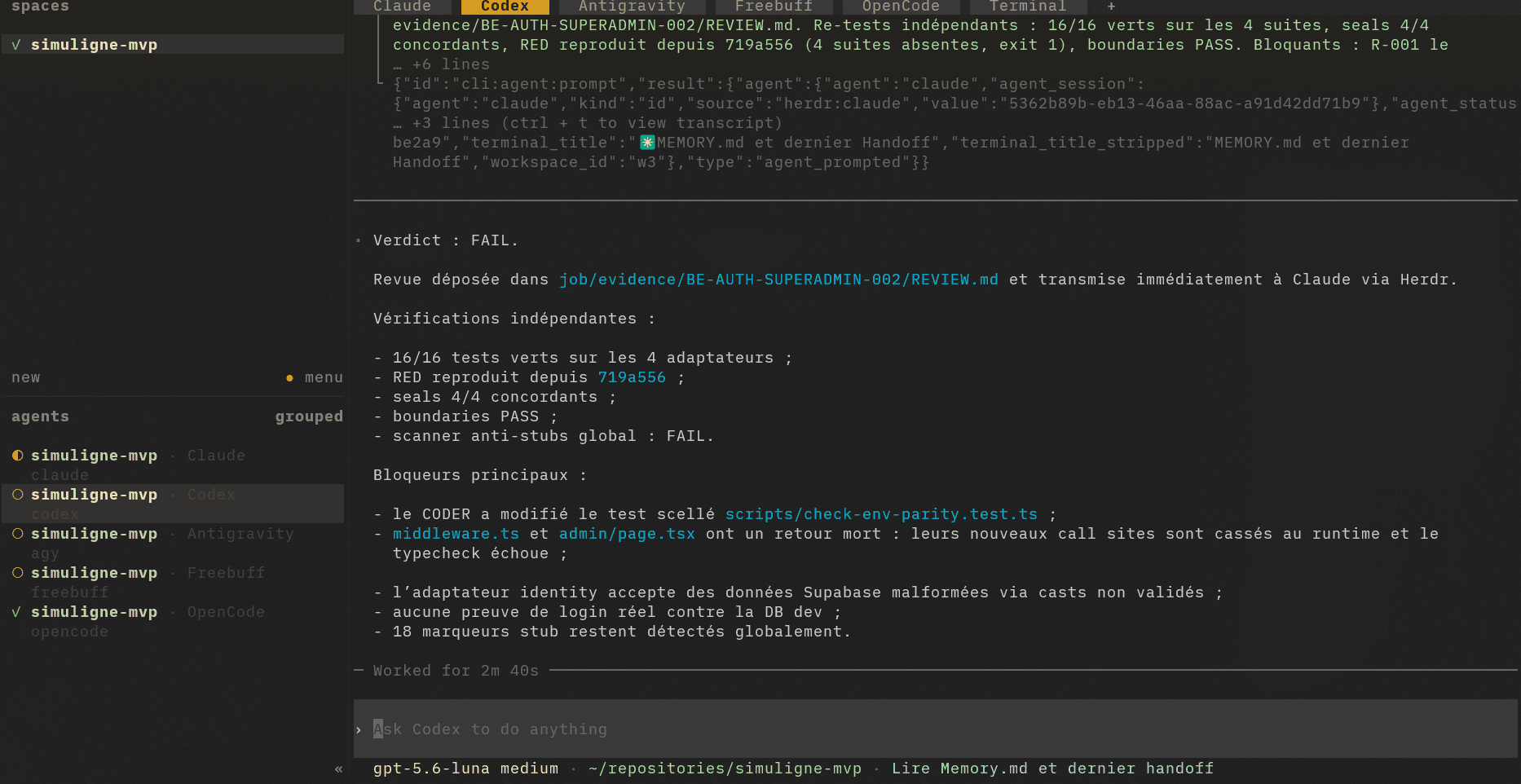
Before the coder begins, the test file hashes and git commit are sealed in a cryptographic manifest. Any post-seal tampering of test files triggers an immediate review failure.
Proof in practice: caught mutation
Here is a real example where the coder mutated a sealed test to make it pass. The review gate detected the hash mismatch and blocked the handoff:
Automated gates and authorization of DONE
DONE is never authorized by an agent saying “I have completed the task”. DONE is authorized by deterministic checks: seal verification passes, tests run GREEN, coverage thresholds are met, and mutation testing verifies the oracle.